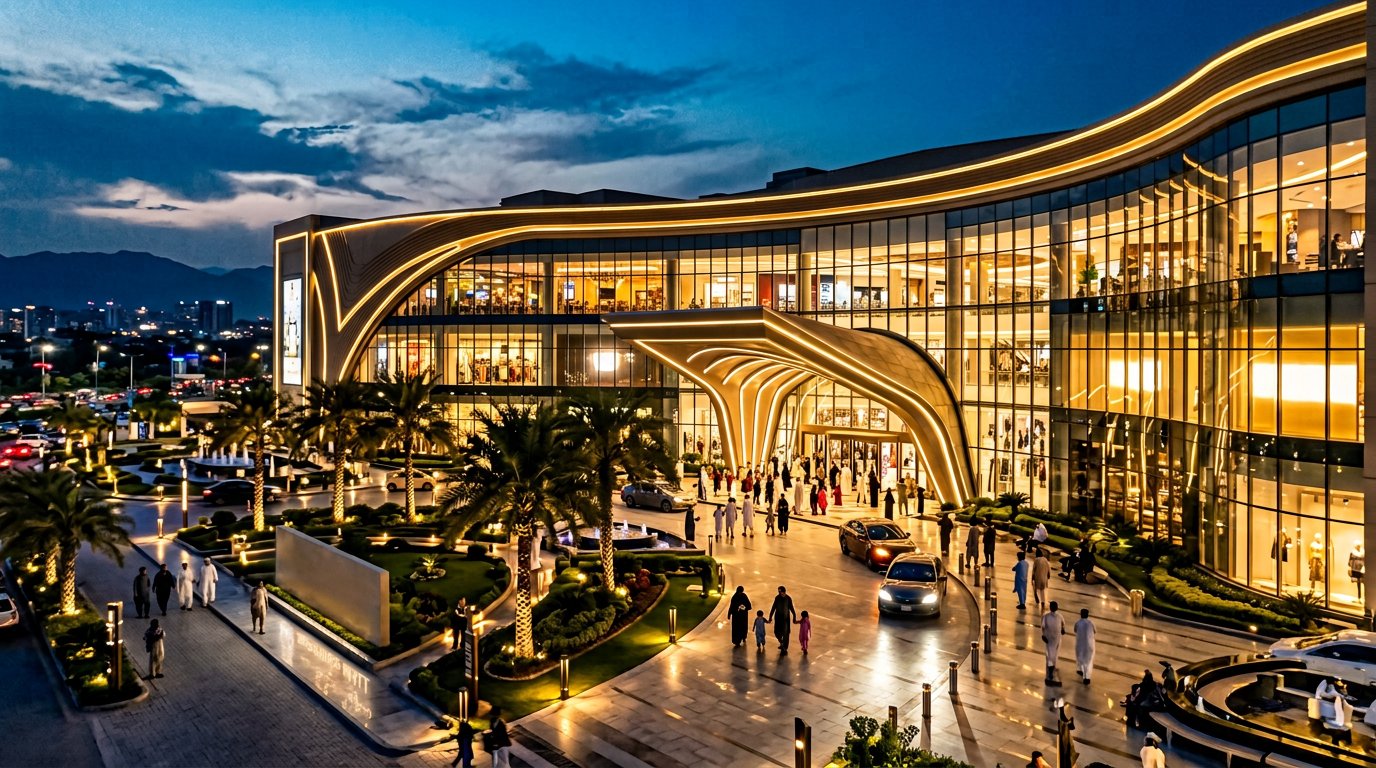
Short answer
Usually yes for rental demand and commercial space within a short drive, and often for apartment values; the effect on quiet family housing directly beside a mall can be mixed because of traffic and noise. The impact depends on whether the mall is well occupied, how it connects to main roads and whether parking spills into residential streets.
Why malls move nearby demand
- Jobs and footfall: a large mall can employ thousands of people, many of whom rent nearby.
- Infrastructure: developers and authorities often upgrade roads, signals and utilities around big malls.
- Amenity value: groceries, cinemas, dining and banking within a short drive are a selling point for families and tenants.
- Commercial spillover: offices, clinics, gyms and restaurants cluster around successful malls.
The trade-offs
- Traffic on weekends and holidays, especially on single access roads.
- Parking spillover into adjacent streets.
- Noise and late hours for houses directly on the mall's frontage.
- Oversupply risk when several malls open in the same area, or when a mall struggles to fill shops.
How to check the effect yourself
- Compare asking prices and rents for the same property type before and after the mall's opening year using listings and the Pakistan Property Price Index.
- Visit at peak time (Saturday evening) and note travel time to your street.
- Look at occupancy: a mall full of operating brands is a stronger signal than one with many empty units.
- Prefer properties one or two streets back from the main road — close enough for convenience, far enough from traffic.